How Celebrity Look Alike Matching Works
The surge in popularity of apps and online services that identify celebrity doppelgängers is rooted in advances in computer vision and machine learning. At the core, a modern celebrity look alike system converts facial images into numerical representations called embeddings. These embeddings capture unique facial geometry, skin texture, relative position of features, and subtle contours that humans may not consciously notice. When a new photo is uploaded, the system generates an embedding for that face and compares it against a library of celebrity embeddings to find the closest matches.
Our AI celebrity look alike finder and face identifier uses advanced face recognition technology to compare your face against thousands of celebrities. Whether the goal is to find what celebrity i look like, search for celebrities that look alike, or discover what actor suits a given face, the process generally follows a consistent flow: detect the face, normalize pose and lighting, extract a feature vector, and rank similarities. Cutoffs and scoring thresholds determine how close a match needs to be before it is presented as a confident result.
Factors such as lighting, camera angle, expression, and makeup can influence results; therefore, good matches often require high-quality, frontal photos. Robust services also account for age progression, facial hair, and glasses by using models trained on diverse datasets. For a quick trial, users curious about which celebs i look like will find that submitting multiple photos improves accuracy, as the system aggregates information from varied angles to produce a more reliable comparison.
The Science Behind Facial Resemblance: Algorithms, Bias, and Limitations
Deep learning models, particularly convolutional neural networks (CNNs) and more recently transformer-based architectures, underpin the ability to say who looks like a celebrity. These models learn hierarchical features: early layers detect basic edges and textures, middle layers capture eyes, nose, and mouth patterns, and deeper layers encode identity-level traits. Feature matching then uses distance metrics—such as cosine similarity or Euclidean distance—to quantify resemblance between faces.
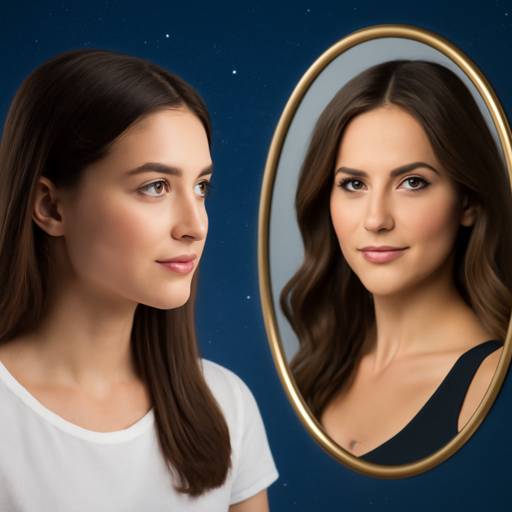
Despite impressive accuracy, limitations remain. Datasets used to train systems can introduce demographic biases, causing less reliable matches for underrepresented groups. Ethical considerations are critical: face recognition must respect privacy and consent, and systems should be transparent about accuracy across age, gender, and ethnicity. Another challenge is the subjective nature of resemblance—two faces can be technically similar in feature space yet perceived differently by human observers due to hairstyle, fashion, or cultural associations.
Practical constraints include pose variance and occlusions. Systems mitigate these with alignment algorithms and synthetic augmentation during training. Post-processing techniques may present multiple ranked suggestions rather than a single verdict, acknowledging uncertainty. For users searching to look like celebrities, understanding these scientific underpinnings clarifies why sometimes the top match feels spot-on and other times only loosely familiar.
Real-World Examples, Case Studies, and Practical Tips
Instances of celebrity look-alike discoveries regularly appear in media: viral images of ordinary people resembling famous actors, historical doppelgängers of public figures, and twin celebrities across cultures. Case studies highlight both successful matches and false positives. For example, a well-lit frontal photo may yield a convincing match to a Hollywood star, while a profile shot could match someone else entirely due to shared jawline or nose slope. These real-world comparisons demonstrate how context and presentation shape perceived likeness.
Practical tips improve outcomes when seeking to find who one looks like a celebrity or exploring look alikes of famous people. Use multiple recent photos that show different expressions and angles. Remove heavy filters that alter skin tone or facial details. Try images without hats or sunglasses, and include shots with natural lighting. When comparing results, consider stylistic matches—similar haircuts, makeup, or facial hair can make two people look more alike than bone structure alone.
Several notable pairs showcase algorithmic and human agreement: historical look-alikes (actors who resemble historical leaders), cross-cultural matches (celebrities sharing facial archetypes), and viral social media discoveries where ordinary users find celebrity matches that spark widespread attention. These examples illustrate the blend of objective feature matching and subjective cultural interpretation that fuels fascination with look alikes of famous people. For those experimenting, treat matches as fun starting points rather than definitive identity claims, and use multiple services or images to triangulate a more reliable sense of resemblance.

A Dublin journalist who spent a decade covering EU politics before moving to Wellington, New Zealand. Penny now tackles topics from Celtic mythology to blockchain logistics, with a trademark blend of humor and hard facts. She runs on flat whites and sea swims.